
Executive Summary
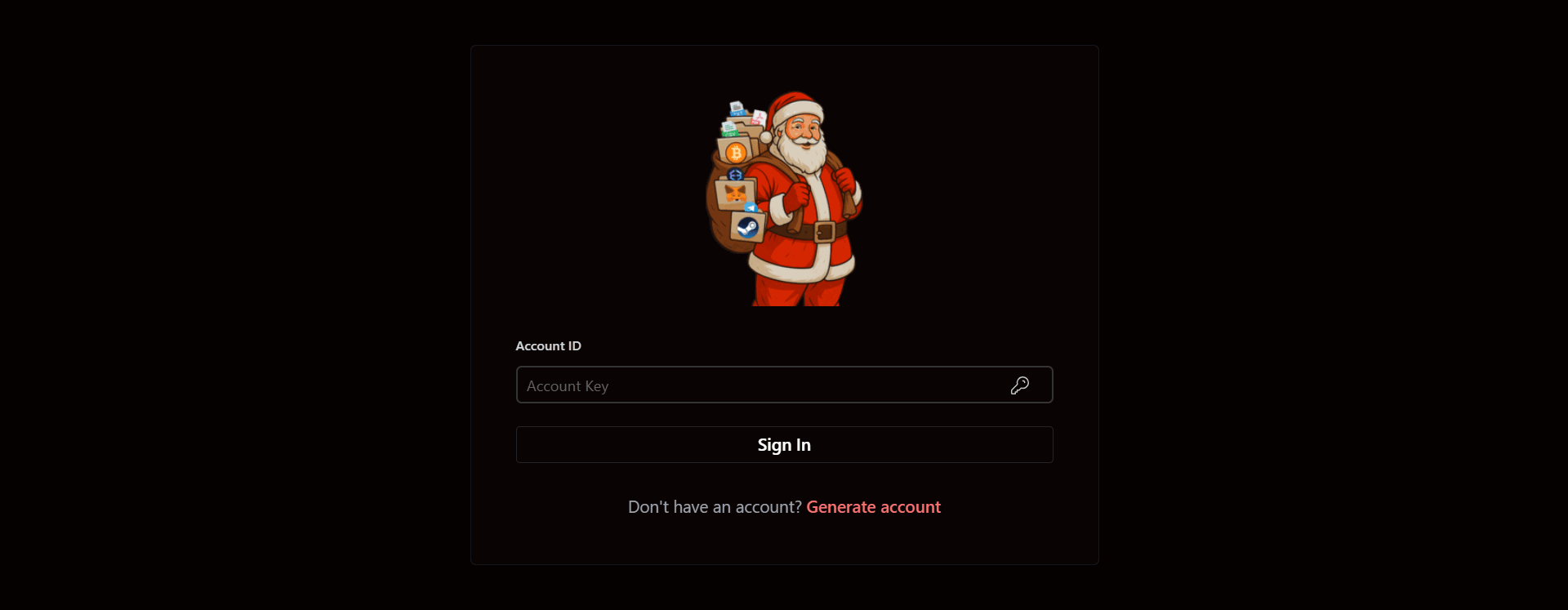
SantaStealer operators released a new malware update announcing the introduction of features designed to expand the collection of sensitive information, strengthen the continuity of communications with its infrastructure and extend the available options for delivering additional payloads.
Among the most relevant changes are new capabilities related to the decryption of data stored by Chromium-based browsers, the collection of credentials saved to Google accounts, the extraction of Google tokens and broader coverage of extensions linked to digital assets.
The announcement also describes mechanisms intended to detect communication blocks applied through DNS services and activate an alternative route using Cloudflare WARP. This is complemented by a command-and-control domain recovery mechanism that relies on alternative channels when the primary method is unavailable.
Key Judgments
- The update broadens SantaStealer’s focus on browsers and authenticated sessions, increasing the potential value of information collected from compromised systems.
- The incorporation of alternative mechanisms to maintain communications with its infrastructure suggests an effort to reduce the impact of basic defensive blocks against its command-and-control domains.
- Expanded coverage of extensions associated with digital assets and the addition of support for Ledger Live reinforce the malware’s interest in cryptocurrency-related data.
- The separation of the clipper component and the expansion of loader module options indicate greater operational modularity, allowing deployed payloads to be adapted to the objectives of each campaign.
- The relevance of the update does not depend solely on the sophistication of each individual feature, but on the convergence of collection, evasion and delivery capabilities within a single Malware-as-a-Service offering.
What Happened
SantaStealer operators published an update summary that includes new features, operational improvements and bug fixes.
Among the announced capabilities, the malware introduces expanded coverage of data stored by modern browsers. The operator claims to have improved access to passwords saved through Google accounts and added the collection of tokens associated with Google services.
The default configuration has also reportedly been expanded with new identifiers for extensions linked to digital assets and additional support for Ledger Live. These changes are intended to increase the scope of collection targeting users involved with cryptocurrencies and decentralized financial services.
Another relevant area concerns communication continuity. According to the announcement, SantaStealer can detect certain blocks applied through DNS services and fall back to an alternative connection using Cloudflare WARP in an attempt to transmit stolen information. The operator also claims to have incorporated a secondary mechanism to recover the command-and-control domain when the primary route is unavailable.
The update also includes changes to auxiliary components. The clipper can be used as a standalone executable or integrated under different configurations, while the loader expands support for MSI installers and allows multiple execution or additional payload-delivery options to be combined.
Operational Assessment
SantaStealer was designed as a modular infostealer commercialized under a Malware-as-a-Service model. Its value proposition does not rely on a single technical capability, but on its ability to bring together different collection mechanisms and configurable options for its customers within one platform.
Expanded access to browser data and session tokens may increase the value of each compromised system, as traditional credentials are not the only relevant assets. Tokens can facilitate unauthorized access to services even when certain security measures hinder the direct use of a stolen password.
The incorporation of alternative routes in response to DNS blocks does not necessarily represent an advanced technique, but it does demonstrate a practical response to predictable defensive measures. Rather than relying on a single domain or communication channel, the malware seeks to preserve its exfiltration capability through alternative mechanisms.
The functional separation of the clipper and the expansion of the loader reinforce an additional trend: SantaStealer is attempting to evolve from a tool focused exclusively on information theft into a more adaptable platform capable of integrating complementary components or enabling actions after the initial compromise.
Intelligence Significance
The update indicates that SantaStealer remains in an active phase of development and incremental improvement. Its commercial availability, modularity and ability to incorporate adjustments rapidly may increase its usefulness for criminal actors seeking a flexible tool for information-theft campaigns.
Enhanced collection targeting browsers, authenticated sessions and digital assets increases the potential exposure of both individual users and organizations. The theft of this type of information may facilitate fraud, unauthorized access to services, the appropriation of digital assets or the subsequent use of credentials within other criminal chains.
The added resilience of its communications also presents a practical defensive challenge. Blocking a single domain may prove insufficient if the malware has alternative routes for recovering instructions or transmitting stolen information.
Analytical Closing
The new SantaStealer update reflects an evolution consistent with its commercialization model: expanding its collection surface, reducing single points of failure and offering greater flexibility to its operators.
Although the announced capabilities still require technical validation, the combined changes reinforce the assessment of SantaStealer as an actively developed threat seeking to improve its utility within the criminal information-stealing ecosystem
Explore 3C-INT
Expand actor, campaign and operational-link tracking through a structured intelligence layer.
Get new publications
Subscribe to receive new articles and public updates from iQBlack without unnecessary noise.