
Threat Actor Characterization

CyberAv3ngers
ID: 2833df69906a2ea5d05283ca4f837bd432121| Av3ngers | Cyber Av3ng3rs | Cy************ | Cy************ |
| Cy************ | So***************** | Ve********************* | — |
Related profiles
| ID | Threat | Origin | Type | Categories | |
|---|---|---|---|---|---|

|
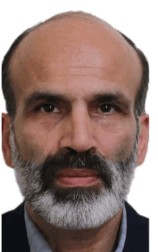
4a84029a776e17dc6114722023bc5c4640579 | Hamid Homayunfal | Unknown | ally-of | Cybercrime |
|
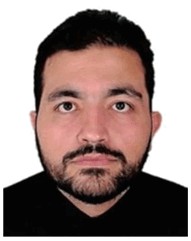
dc8eceafd88a3bf25d2d43d57b6c4d3499330 | Hamid Reza Lashgarian | Unknown | ally-of | Cybercrime |
|
d9d80d03cfe271e7a52c9a8768b0178c82621 | Islamic Revolutionary Guard Corps Cyber | Iran | ally-of | Cybercrime |
|
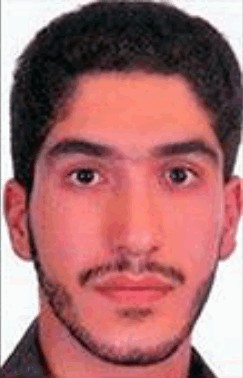
bd1c4dda869dd9a6f9450fcc24ef675b53497 | Mahdi Lashgarian | Unknown | ally-of | Cybercrime |
|
c81f42761d1b53a2d875a33ddfb8cdb764758 | Milad Mansuri | Iran | member-of | Cybercrime |
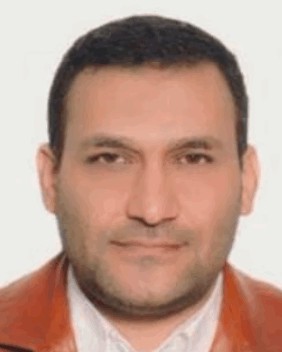
|
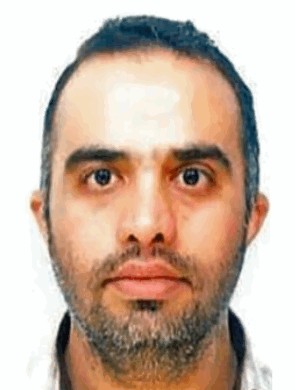
7bfa626f1034b6920c71aa859c6996f481556 | Mohammad Bagher Shirinkar | Iran | member-of | Cybercrime |
|
1f5fd004e2bc3bbfb90dfe63b705316398875 | Mr Soul | Iran | affiliated | Cybercrime |
|
8e1b51115cf9f23a27dc1e40755faace18409 | Reza Mohammad Amin Saberian | Iran | member-of | Cybercrime |

|
c10849ad18c502e24aa0deb1e72ea8d450069 | Soldiers of Solomon | Iran | related | Hacktivist Group |
Related files
Actor Network Graph
Open Network GraphMITRE ATT&CK®
CyberAv3ngers is an IRGC-CEC-linked disruptive cyber persona associated with compromises of exposed OT/ICS devices, especially Unitronics PLC/HMI environments, and with broader Iran-linked OT/IoT malware activity. The actor blends real disruption with propaganda and claim amplification against Israel-linked and U.S./allied critical infrastructure targets.
| Technique | Technique name | Tactics | Evidence |
|---|---|---|---|
| T1110 | Brute Force | TA0006 |
|
| T1078.001 | Default Accounts | TA0001 TA0003 TA0004 TA0005 |
|
| T1491.001 | Internal Defacement | TA0040 |
|
| T1565.001 | Stored Data Manipulation | TA0040 |
|
| T1531 | Account Access Removal | TA0040 |
|
| T1190 | Exploit Public-Facing Application | TA0001 |
|
| T1071 | Application Layer Protocol | TA0011 |
|
| T1583.001 | Domains | TA0042 |
|
CyberAv3ngers — IRGC-affiliated OT-targeting persona / critical infrastructure disruption label
Classification: TLP:WHITE — Open Source Intelligence (OSINT)
Category: Cyber / State-linked “faketivist” / OT-targeting disruptive persona — Origin: Iran
Author: iQBlack CTI Team
Executive Summary
CyberAv3ngers is an Iranian state-linked cyber persona publicly associated by U.S. and allied authorities with the Islamic Revolutionary Guard Corps Cyber-Electronic Command (IRGC-CEC). Although branded like a hacktivist or patriotic pressure group, public government reporting indicates that the persona has been used to claim and amplify disruptive cyber activity against operational technology (OT) and critical infrastructure, particularly where Israeli-made technology or Israel-linked political narratives can be exploited.
The actor became globally prominent during late 2023 after compromises of internet-exposed Unitronics Vision series PLC/HMI devices in multiple sectors, including U.S. water and wastewater systems. Public advisories assessed that the compromises relied primarily on insecure exposure, default credentials or no passwords, and default communications settings rather than a complex zero-day chain. The actor’s operational effect was therefore not “advanced stealth” so much as the weaponization of weak OT hygiene for strategic messaging, disruption, and intimidation.